METHODS · 2026-08-17
Knife and Board: Cutting Without Dragging
By Gimbap Curator
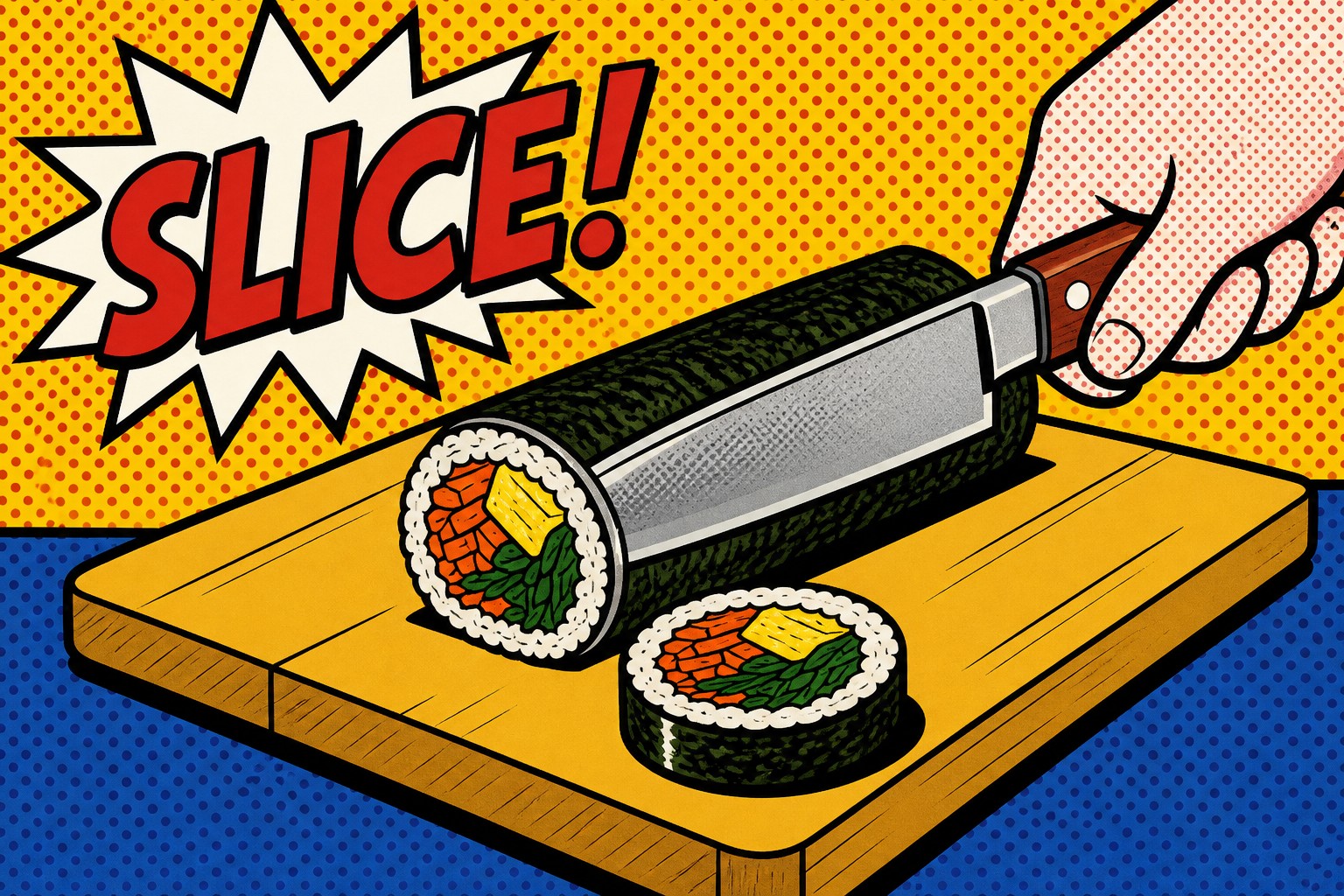
A sharp wet knife and a steady board make six clean coins; a serrated knife makes six smeared ovals.
TL;DR
A sharp wet knife and a steady board make six clean coins; a serrated knife makes six smeared ovals.
Sharpness is non-negotiable. A 180 mm santoku or Korean laminas ground recently slices gim cleanly; a dull knife tears seaweed and drags rice, turning fillings into smears. Hone before every gimbap session.
Wet the blade between rolls, not between slices. Dip in water, shake off excess, then cut full roll in long single strokes; re-wetting between slices over-wets rice and dulls the cut, while a dirty blade sticks more than a lightly oiled one.
Board stability: put a damp towel under your cutting board or use a non-slip mat. Gimbap cutting requires forward pull; any sliding turns pressure diagonal and crushes the roll instead of slicing.
Thickness consistency signals intent. Pick 2–2.5 cm per coin and keep it; varying thicknesses make a platter look amateur and uneven pieces dry at different rates. Use the roll's seam as a guide and cut perpendicular to it.
Presentation finish: arrange coins seam-down with a gap between rows, drizzle no sauce on top, and tuck a tiny kimchi cup or danmuji slice as color accent. The plate is finished with restraint, not garnish piles that slide fillings.
More Korean food
Relevant pages on the two hub sites — recipes and a BBQ directory on bulgogi.ai, street rice cakes on tteokbokki.ai.
- bulgogi.ai — recipes & BBQ directory →Marinades, cuts, and a USA Korean BBQ map.
- tteokbokki.ai — street rice cakes →School-cart sauce, rose, mala, and tteok types.
- Picnic next to japchae →A dosirak that holds at room temp wants both a roll and a noodle tangle.