CULTURE · 2026-08-14
Dosirak and Picnic Packing: Gimbap That Holds
By Gimbap Curator
Why gimbap is Korea's portable lunch — and how to pack it so second-hour slices still look like first-hour.
TL;DR
Why gimbap is Korea's portable lunch — and how to pack it so second-hour slices still look like first-hour.
Gimbap was made for transit. Sesame-oiled rice and cooked fillings hold at room temp longer than raw sushi, which is why every Korean park spring day has someone slicing gimbap on a cutting board brought from home.
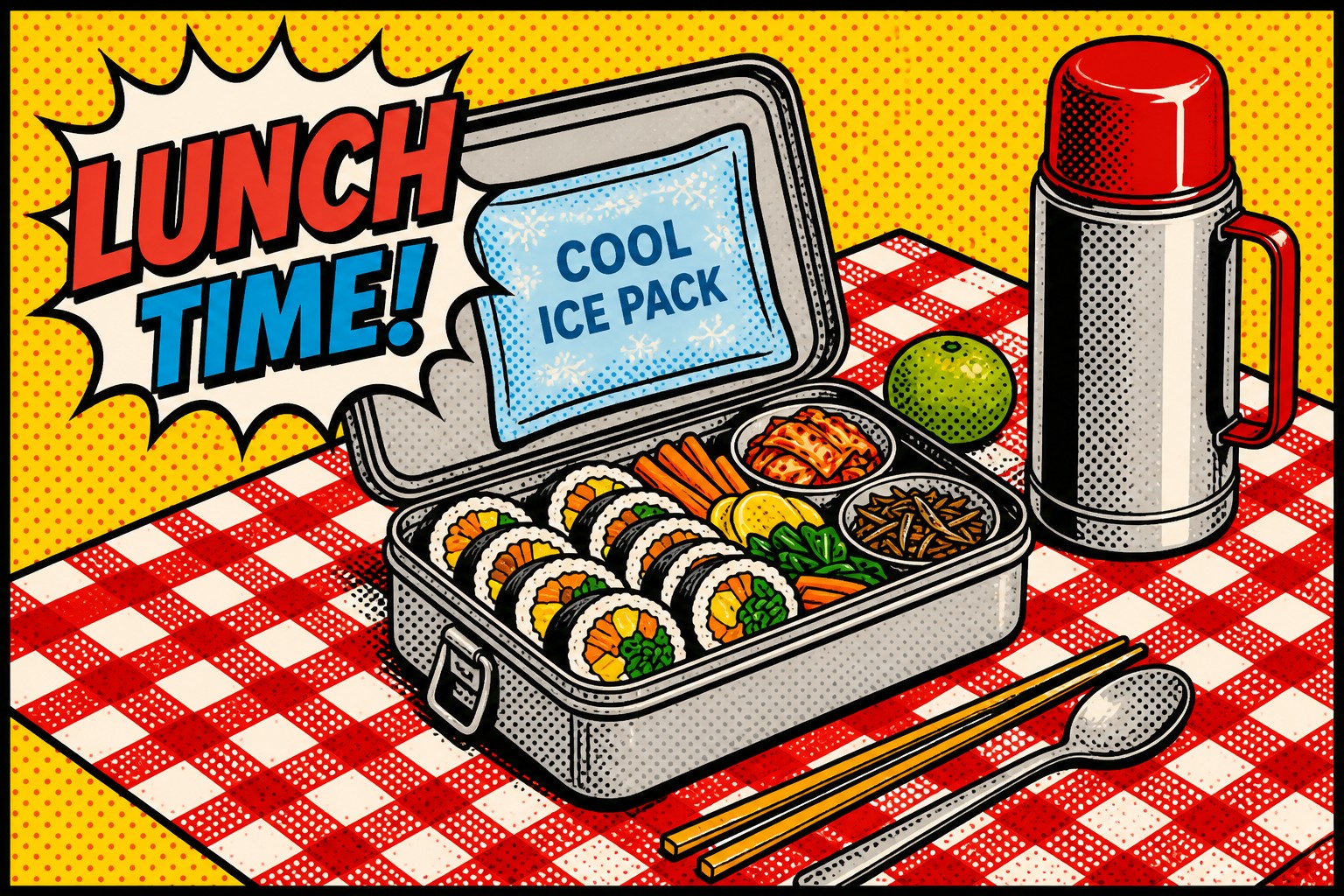
Pack unsliced for travel: wrap rolls whole in foil after they rest, slice at the site with a wet knife. Pre-sliced packs dry at the cut faces and stick to each other; whole rolls retain moisture and seaweed pliability.
Cool before wrapping. Hot gimbap wrapped in plastic steams itself soggy; let rolls cool uncovered 8–10 minutes after sealing, then wrap snug. If you must pack hot, leave ends open 10 minutes to vent.
Separation matters in a shared dosirak: keep kimchi and tteokbokki in separate sealed cups so brine never touches gimbap. One spilled kimchi cup can dye half a platter pink and soften gim beyond rescue.
For kids, cut 2 cm coins and tuck with perilla leaf or small ham squares as finger food; for adults, cut 2.5 cm and keep per-roll count at 6 pieces for symmetry. The coin thickness signals intended eater without labeling.
More Korean food
Relevant pages on the two hub sites — recipes and a BBQ directory on bulgogi.ai, street rice cakes on tteokbokki.ai.
- bulgogi.ai — recipes & BBQ directory →Marinades, cuts, and a USA Korean BBQ map.
- tteokbokki.ai — street rice cakes →School-cart sauce, rose, mala, and tteok types.
- Picnic next to japchae →A dosirak that holds at room temp wants both a roll and a noodle tangle.